
Home is supposed to be our ultimate safe haven—a place where we can relax and unwind. But when was the last time you took a hard look at your surroundings and asked yourself, “Is my home actually safe from fire hazards?”
Every year, thousands of preventable house fires cause devastating property damage and put lives at risk. The good news? You don’t need to live in fear. By implementing a few straightforward habits, you can drastically reduce your risk.
If you want to protect your family and your property, here are 5 critical rules for fire safety at home that you simply cannot ignore.
1. Never Leave Your Cooking Unattended
Did you know that the kitchen is the number one place where home fires start? It only takes a few seconds of distraction for a pan of oil to catch fire.
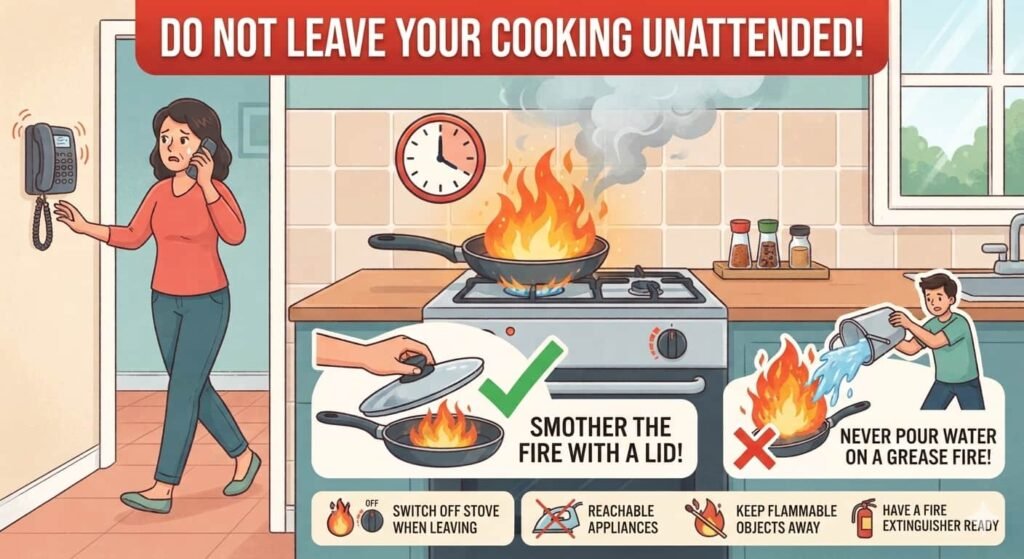
The Rule: If you are frying, boiling, grilling, or broiling food, stay in the kitchen. If you must leave the room, even for a moment, turn off the stove. For simmering or baking, check the food regularly and use a timer to remind yourself that the stove or oven is on. Keep anything that can catch fire—like oven mitts, wooden utensils, food packaging, and towels—away from your stovetop.
2. Install (and Test) Smoke Alarms on Every Level
A working smoke alarm reduces your chances of dying in a home fire by half. It is your family’s first line of defense, providing that crucial early warning so you can get outside quickly.
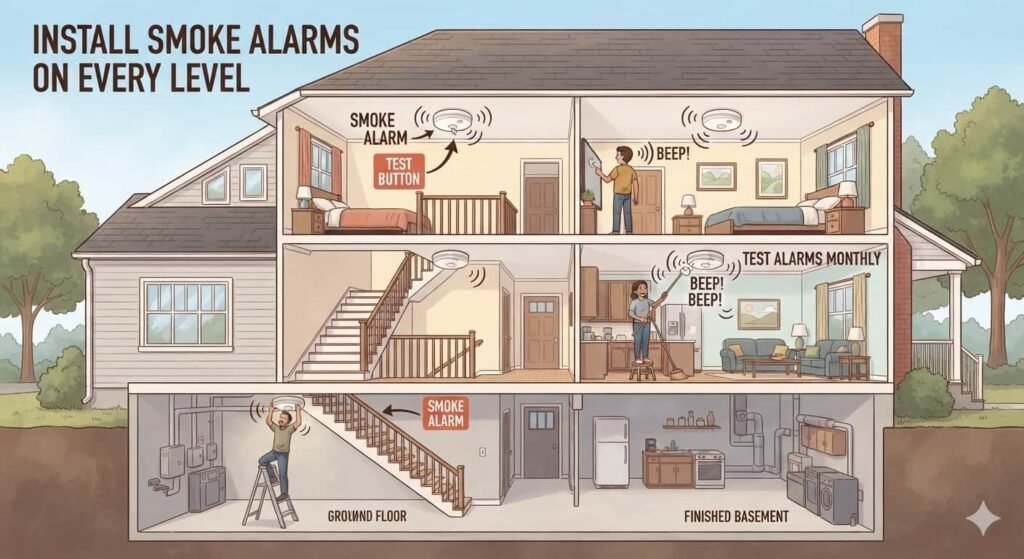
The Rule: Install smoke alarms inside every bedroom, outside every sleeping area, and on every level of your home, including the basement. But installing them isn’t enough; you must test them once a month by pressing the test button. Replace the batteries at least once a year, and replace the entire smoke alarm unit every 10 years.
3. Don’t Overload Electrical Outlets
In our modern, device-heavy lives, it’s tempting to plug phones, laptops, and appliances into a single extension cord or power strip. However, overloaded circuits and damaged wires are major fire hazards.
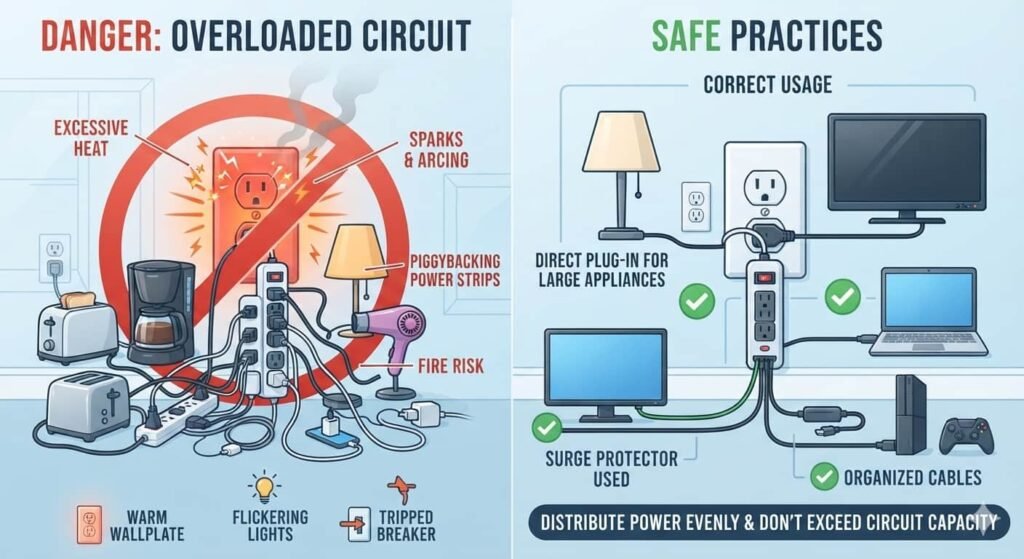
The Rule: Plug major appliances (like refrigerators, microwaves, and space heaters) directly into a wall outlet, never into an extension cord or power strip. Regularly check your cords for fraying or cracking, and replace them immediately if they are damaged. If you find yourself relying heavily on extension cords, it might be time to hire an electrician to install more outlets.
4. Give Space Heaters and Candles Their “Space”
Things that are designed to get hot can easily ignite nearby objects. Space heaters and decorative candles are frequent culprits in winter and holiday-related house fires.
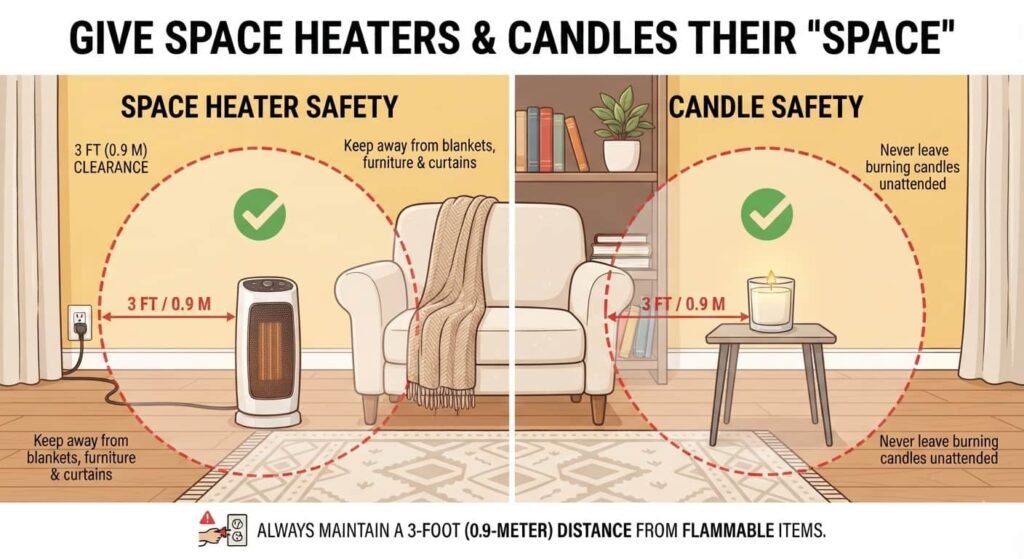
The Rule: Maintain a strict “3-foot rule” (about 1 meter). Keep anything that can burn—curtains, blankets, clothing, paper, and furniture—at least three feet away from space heaters, radiators, and fireplaces. If you use candles, always blow them out before leaving the room or going to bed. Consider switching to battery-operated flameless candles for a safer ambiance.
5. Create and Practice a Fire Escape Plan
If a fire breaks out, you might have less than two minutes to escape safely once the smoke alarm sounds. In a panic, people can easily become disoriented, especially children.
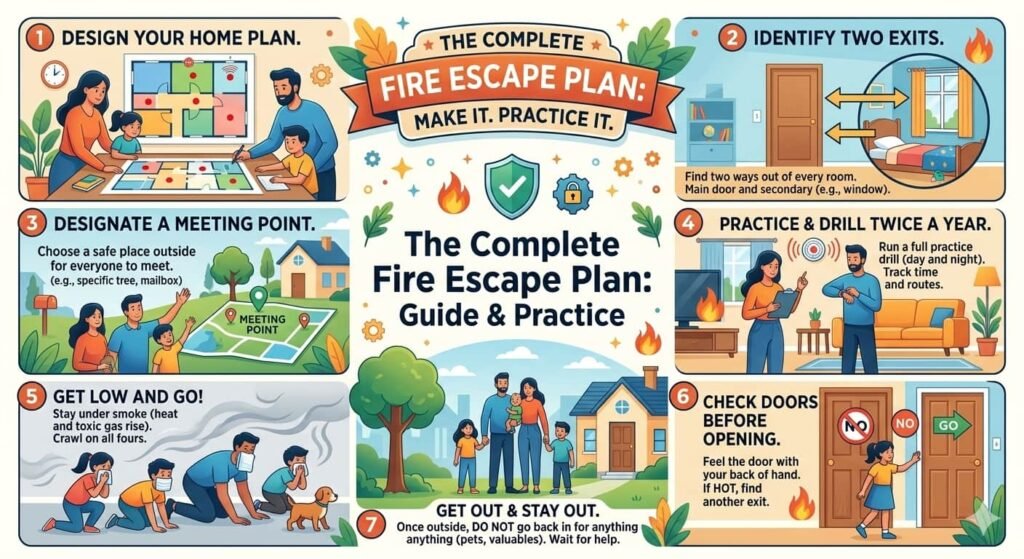
The Rule: Sit down with your family and draw a map of your home. Identify two ways out of every room (usually a door and a window). Choose a safe meeting place outside, a safe distance from the house, where everyone will gather. Most importantly, practice this plan at least twice a year—once during the day and once at night—so that everyone knows exactly what to do without hesitation.
Final Thoughts on Home Fire Safety
Fire safety at home isn’t about paranoia; it’s about preparation. Taking a few hours this weekend to test your alarms, clear hazards around your outlets, and review your escape plan can make all the difference. Don’t wait until it’s too late—take action today and give yourself the peace of mind knowing your safe haven is truly protected.