
Relying on generic phone apps often leaves you unprepared for sudden downpours or shifting microclimates right outside your doorstep, which is why investing in the best home weather stations is the ultimate game-changer for hyper-local precision.
Whether you are an avid gardener tracking soil moisture and rainfall, a smart home enthusiast automating climate routines, or simply tired of inaccurate city-wide forecasts, having a dedicated personal weather setup gives you real-time atmospheric data tailored specifically to your backyard. To help you find the perfect balance between sensor reliability, ease of installation, and sleek display design, we have rounded up the top five contenders that deliver dependable readings without unnecessary guesswork.
1. Ambient Weather WS-2902: Popular choice
The WS2902A weather station is a reliable and feature-rich device for monitoring local weather conditions, including temperature, wind, pressure, and rainfall, while also sharing data with platforms such as Weather Underground, AmbientWeather.net, and Weathercloud. Although the initial setup can be confusing and may require patience, the system can provide frequent and accurate reports once properly connected to a 2.4 GHz Wi-Fi network.
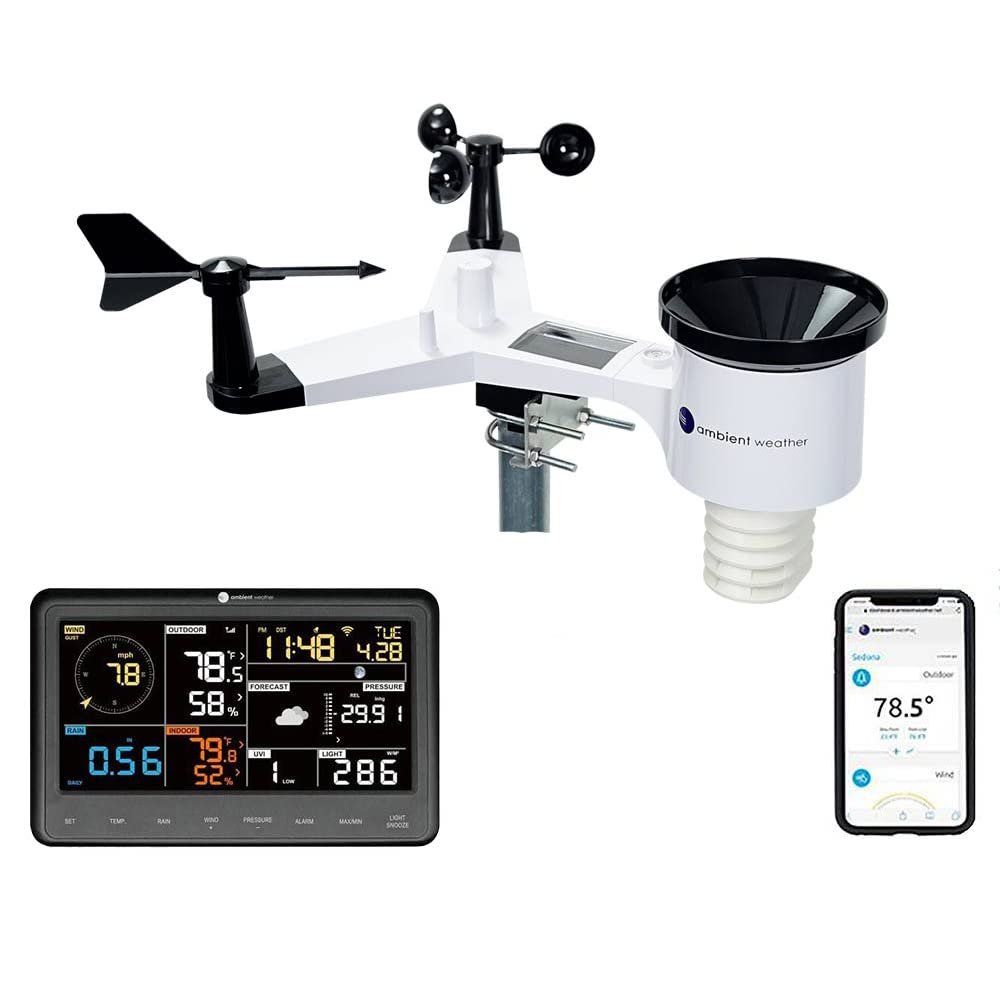
Its long-term durability is another major advantage: one user reported nearly five years of dependable operation and excellent rainfall records after calibration. The station is also suitable for outdoor use in harsh sunlight when regularly maintained, making it a practical upgrade for home weather monitoring and a useful companion for outdoor activities or RV travel.
2. AcuRite Iris (5-in-1) Home Weather Station: Affordable
The AcuRite 5-in-1 Weather Station with WiFi is a reliable and practical device for monitoring weather conditions at home. It provides accurate, consistent data, including wind speed, and can send high-wind alerts based on a user-defined limit.
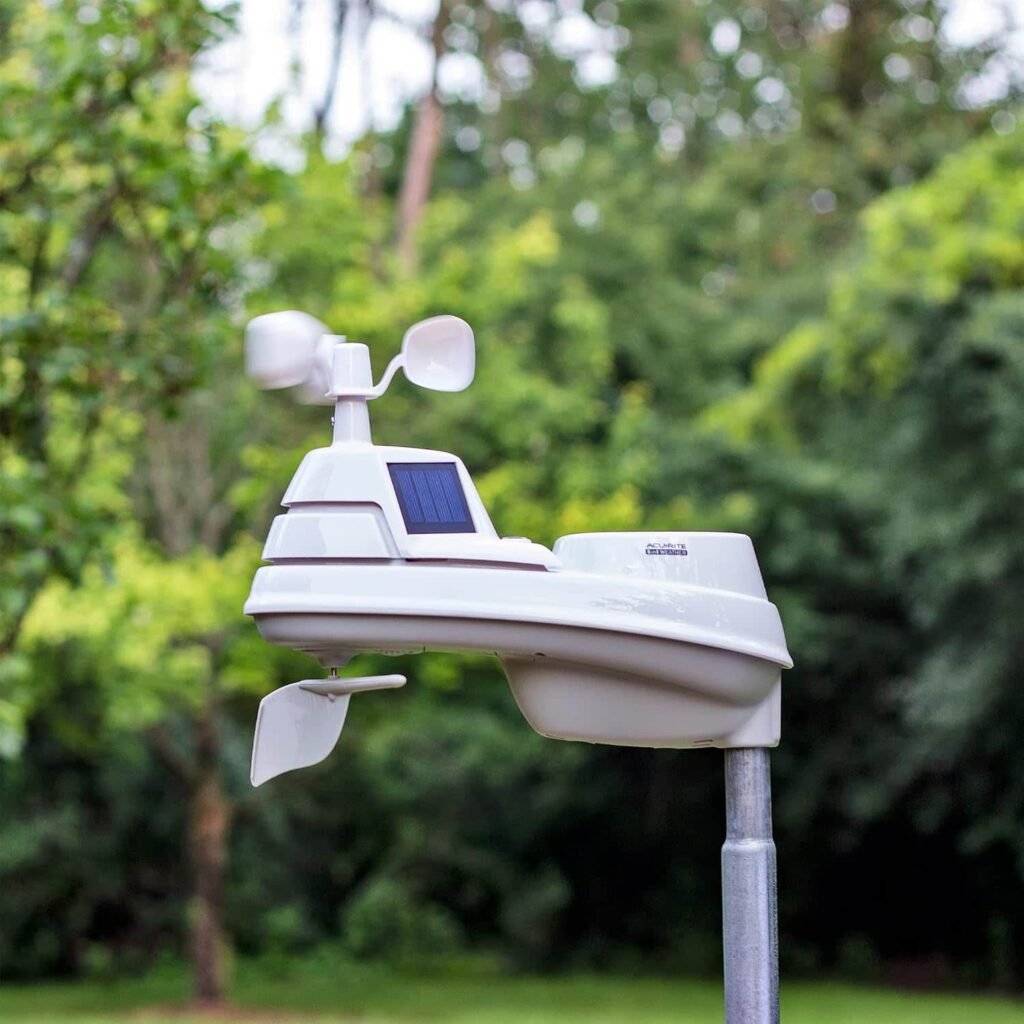
After connecting it to a home WiFi network and registering it with Weather Underground, the station can transmit weather information automatically and continue reconnecting after temporary internet outages. Its compatibility with the AcuRite app also allows users to manage the device and access updates conveniently, making it a useful choice for anyone who wants dependable, real-time local weather information.
3. Tempest Weather Station: Easiest to set up
The Tempest Weather Station is a smart, solar-powered outdoor weather monitoring system that provides real-time, hyperlocal data on temperature, humidity, barometric pressure, wind speed and direction, rainfall, UV levels, solar radiation, dew point, and nearby lightning activity.
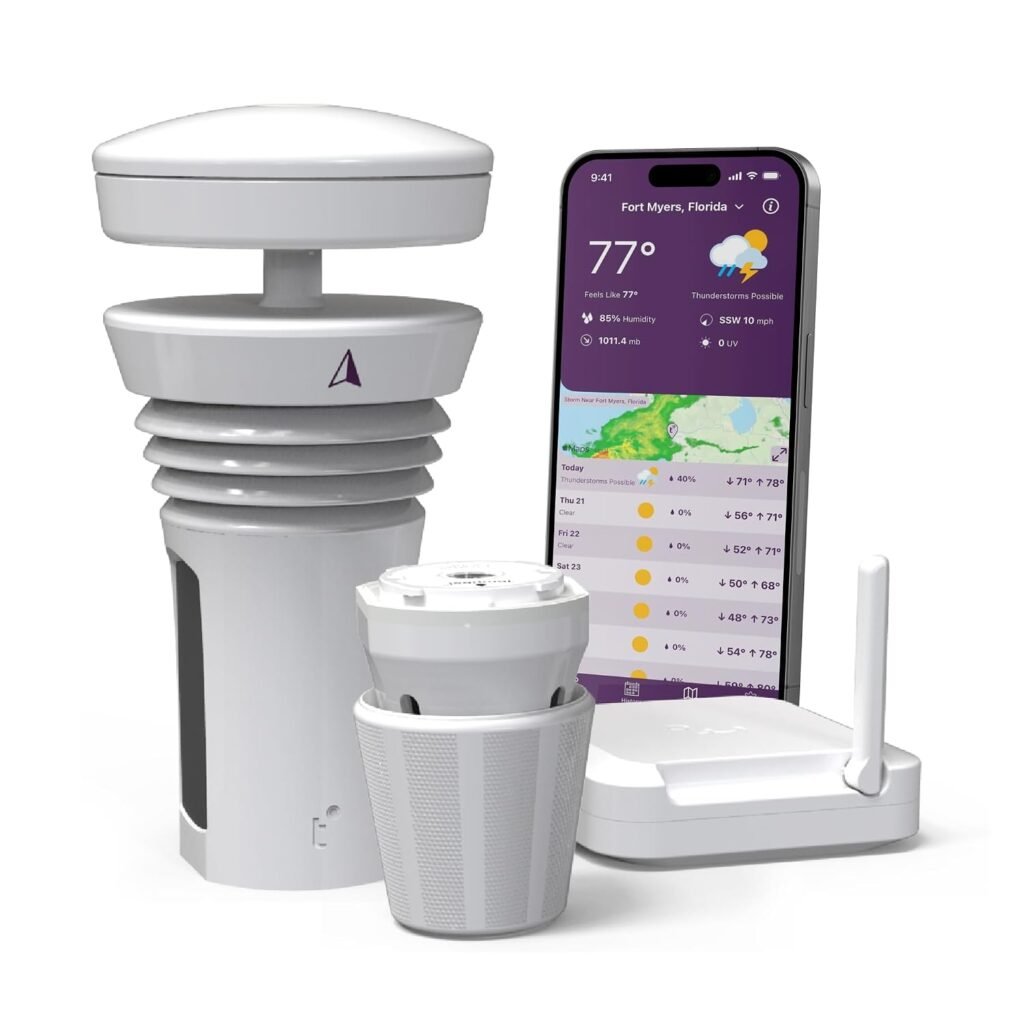
Its wireless, all-in-one design has no moving parts, making it easy to install and requiring very little maintenance, while the companion app delivers detailed readings, historical charts, forecasts, and weather alerts from anywhere. It can also connect with Alexa, IFTTT, Rachio, and other smart-home services, allowing users to automate irrigation, lighting, thermostats, and more based on current backyard conditions.
4. BRESSER 5-in-1 Weather Station: Expandable
The BRESSER 5-in-1 Weather Station is a practical tool for monitoring indoor and outdoor conditions at home, in the garden, or on a patio. Its wireless outdoor sensor measures temperature, humidity, air pressure, rainfall, wind speed, and wind direction, while the LCD display also provides 12-hour weather forecasts, moon phases, weather trends, minimum and maximum readings, and frost alerts.
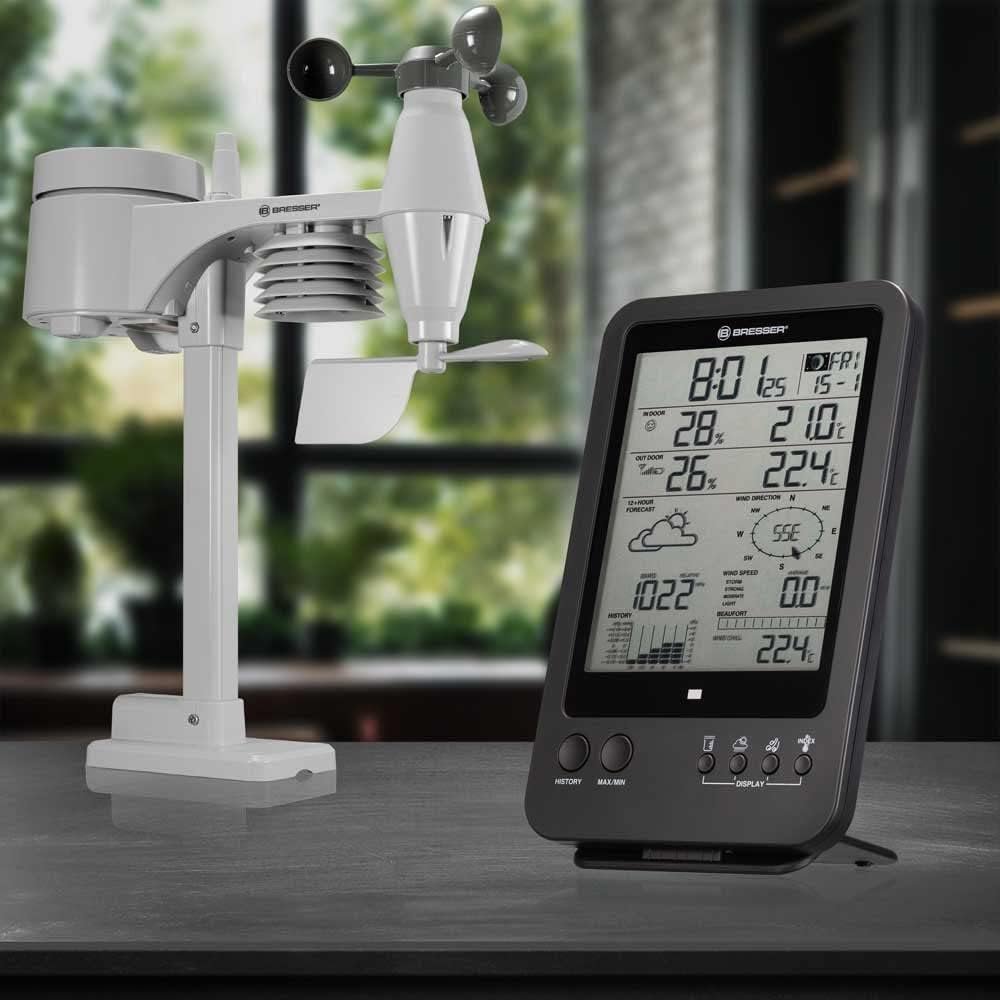
It includes a DCF radio-controlled clock with a manual setting option, an amber backlight, and mounting accessories, making it relatively easy to install and use. With a sturdy design, broad range of useful measurements, and a strong 4.5-star rating from nearly 6,000 reviews, it offers good value for everyday weather observation, although the wind-speed readings may be less accurate than those from professional equipment.
5. VEVOR 7-in-1 Wireless Weather Station: The cheapest way into wind and rain data
This weather station offers reliable, long-term outdoor performance with a large solar panel that keeps its sensors powered and transmitting for months without requiring a recharge. Its rechargeable lithium battery, durable outdoor hardware, and simple installation make it a practical upgrade from stations that depend on frequently replaced AAA batteries.
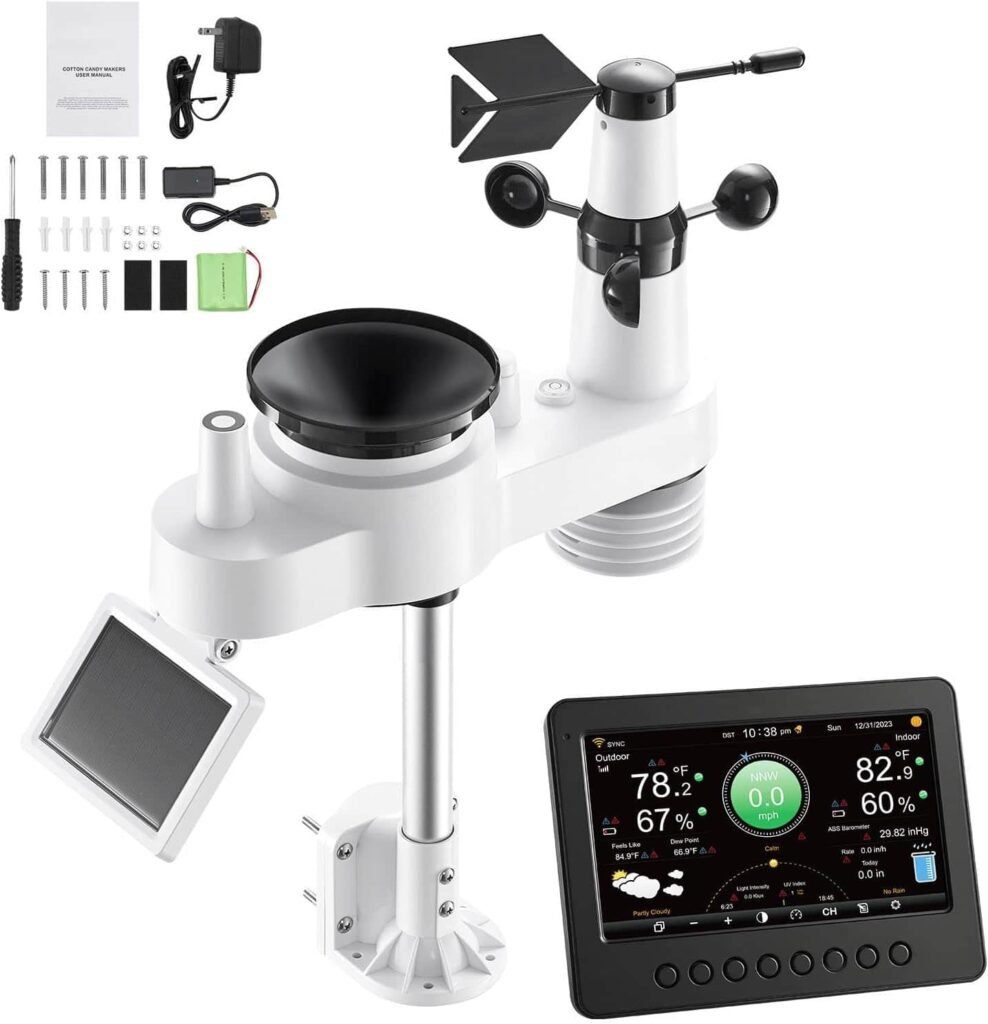
The sensor unit connects easily to the indoor display and provides detailed information, including wind speed, gusts, averages, and rainfall measurements across several time periods. However, the indoor display has notable limitations: a brief power outage can erase stored weather history and basic settings, and it lacks battery backup or an SD card slot. Overall, it is an excellent choice for dependable outdoor monitoring, although the display and data-storage features could be improved.